
How does your collection interpret “Handmade for the Earth” through your choice of techniques and materials?
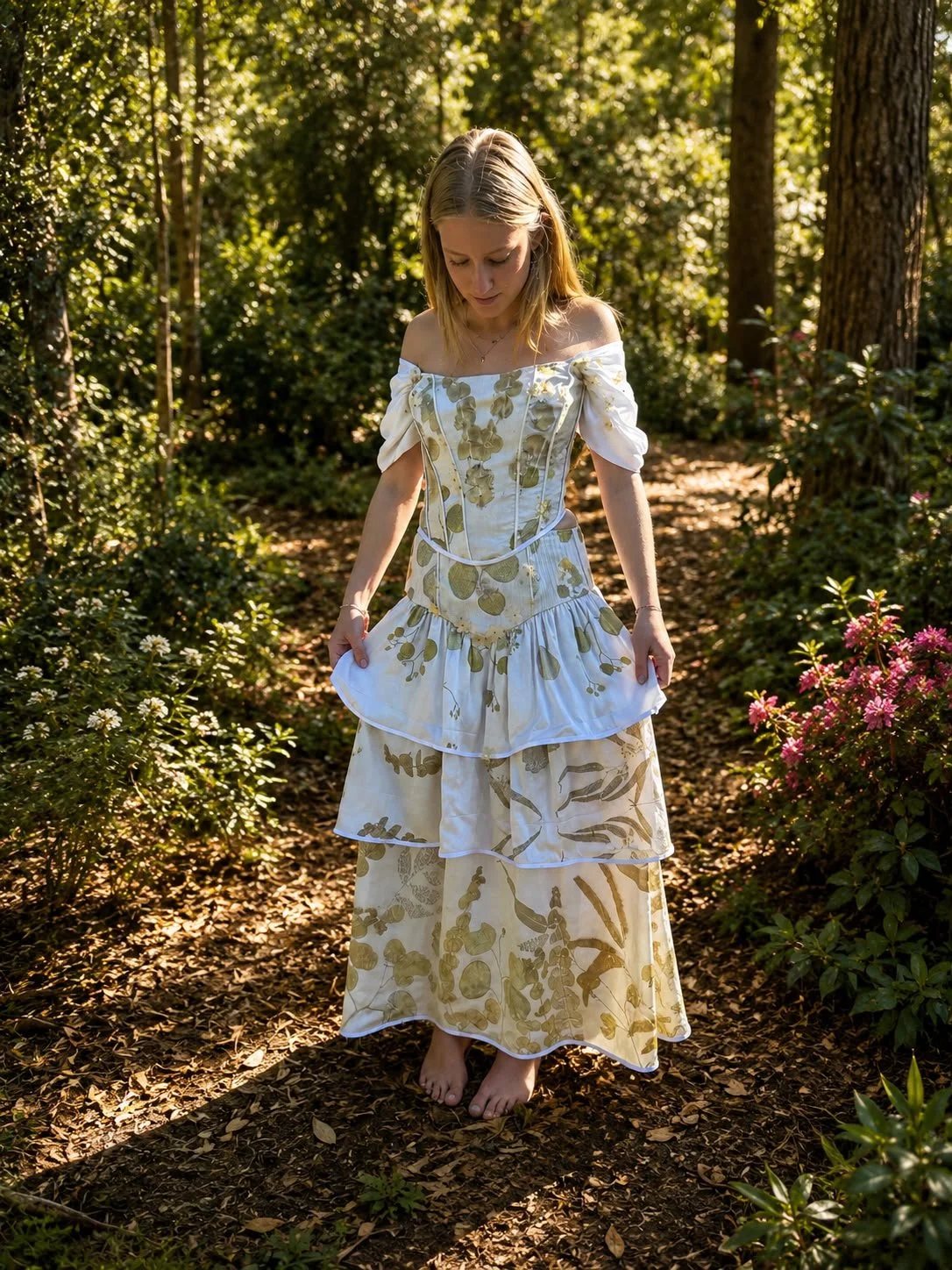
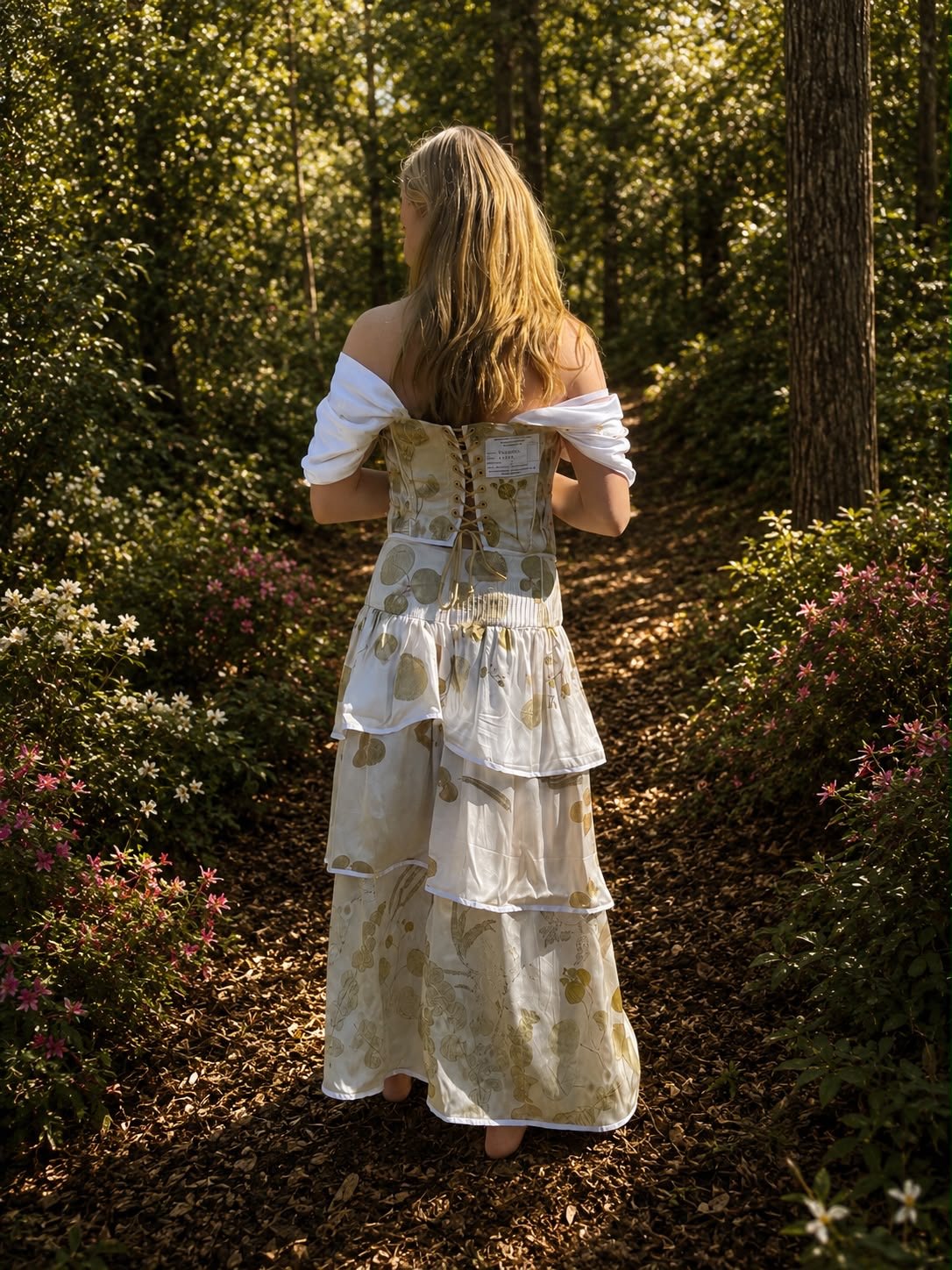
Amelie: My costume is made from silk and features botanical prints created with Australian eucalyptus leaves. I wanted the materials and the process to feel connected to nature. The pleating, handmade piping and beaded flowers took time, but that’s what makes the piece special to me. You can see the work that has gone into it.
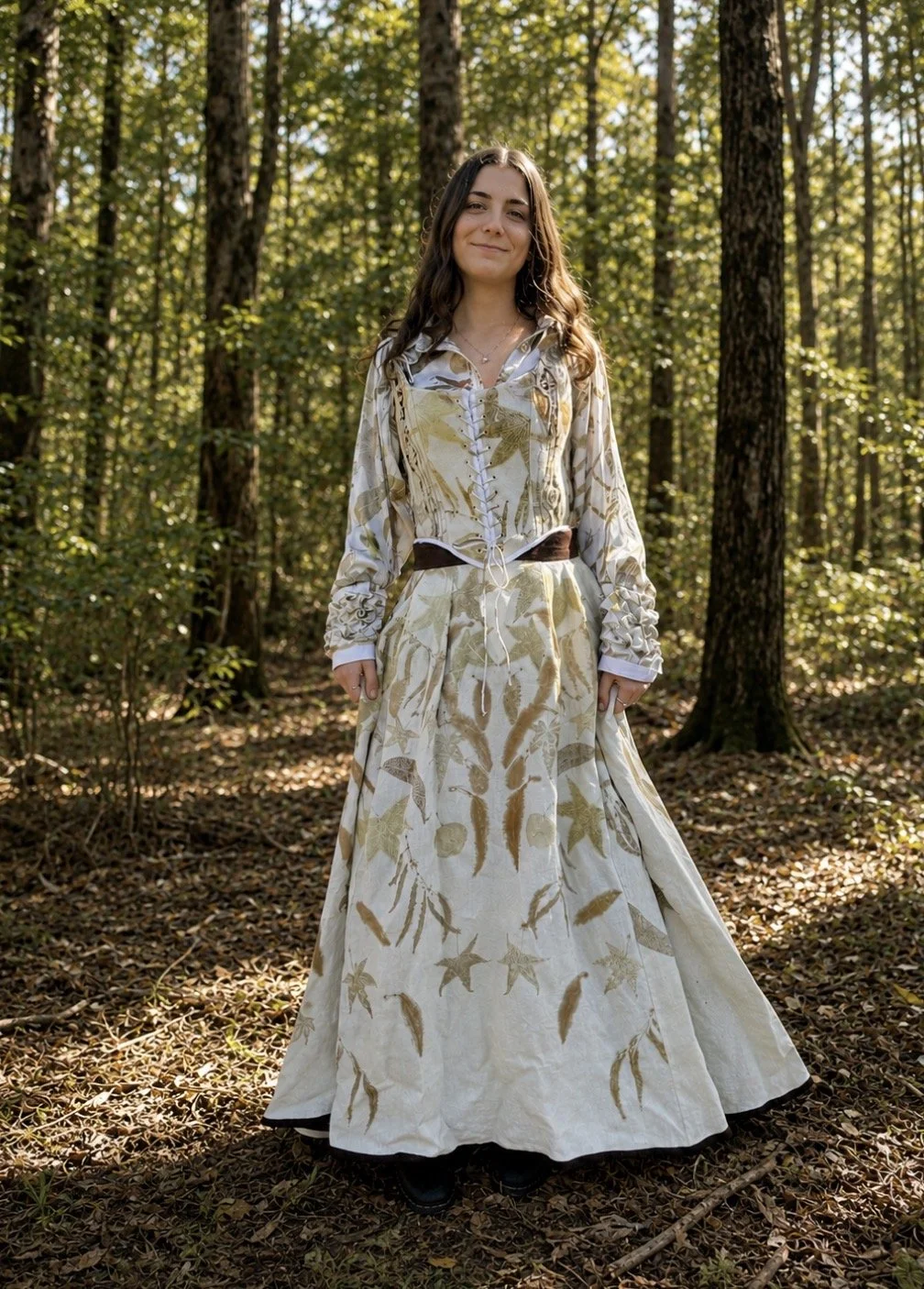
Hannah: I used linen, wool and silk, and botanically printed all three garments with Australian leaves. The colours and textures were inspired by autumn and the natural world. ‘Handmade for the Earth’ describes both what the costume is made from and the care that went into making it.
What specific artisanal process defines this collection?
Amelie: Botanical printing is at the heart of my project. Every print develops differently, so the fabric has a quality I couldn’t have achieved by repeating a manufactured print. I then built on that with pleating, embroidery and handmade floral embellishments.
Hannah: Botanical printing defines my costume, alongside the hand techniques I used to add texture and detail. I couched banana silk yarn to suggest tree bark and hand embroidered a fox. Those details helped me tell the story behind the garment.
How does your work incorporate or preserve cultural craftsmanship while keeping a contemporary edge?
Amelie: I drew on the romance of Pre-Raphaelite art and traditional corset construction, then interpreted those influences as a costume for a contemporary photoshoot. Combining those references with botanical printing and textured embellishment helped me create something that feels both historical and my own.
Hannah: My costume uses traditional garment construction and hand embroidery, but its character and styling were inspired by Fantastic Mr Fox and contemporary fashion. I liked bringing those different influences together in a piece that still shows the value of making things by hand.
How did working with traditional techniques shape your process as a designer?
Amelie: Hand techniques made me slow down and respond to the fabric as I worked. The botanical prints were never completely predictable, so I had to consider how the pleating, piping and flowers would work with the marks already on the silk.
Hannah: The handwork encouraged me to think about texture as much as shape. Building up the bark-like couching and embroidered details took patience, but those are the parts that give the costume its personality.
What was the most challenging sustainable constraint you navigated?
Amelie: Botanical printing meant accepting that I couldn’t control every mark or colour exactly. I had to work with the results that the leaves and fabric gave me. That became one of my favourite parts of the project because each piece of fabric is unique.
Hannah: Using botanical prints across linen, wool and silk was a challenge because each fabric responded differently. I needed the garments to feel like one costume while allowing each material to keep its own texture and character.
How do you ensure your garments remain low impact across their life cycle, from source fibre to end-of-use?
Joint response: We chose natural fibres and used botanical printing with Australian leaves rather than relying on a conventional printed design. We also put a lot of time into constructing and finishing our garments carefully, because we want our designs to be kept and appreciated well beyond one runway show. As student designers, we are still learning about the full impact of every material and process, and that’s something we want to keep exploring.
Showing at the Midland Junction Arts Centre for the Perth segment of EFWA26 brings your work to a dedicated local and international community. What message or feeling do you hope the Western Australian audience takes away from viewing your pieces on the runway?
Amelie: I’m excited to see how my costume looks in motion on the runway. I hope people notice the prints made with eucalyptus leaves and then spot more of the details as it comes closer, the pleating, piping and flowers. There is a lot in it that I made by hand, and I would love people to see that.
Hannah: I hope people enjoy discovering the details in my costume, especially the embroidered fox and the textures inspired by tree bark. It started with my love of Fantastic Mr Foxand autumn, so I would love the audience to get a sense of that story when they see it.