
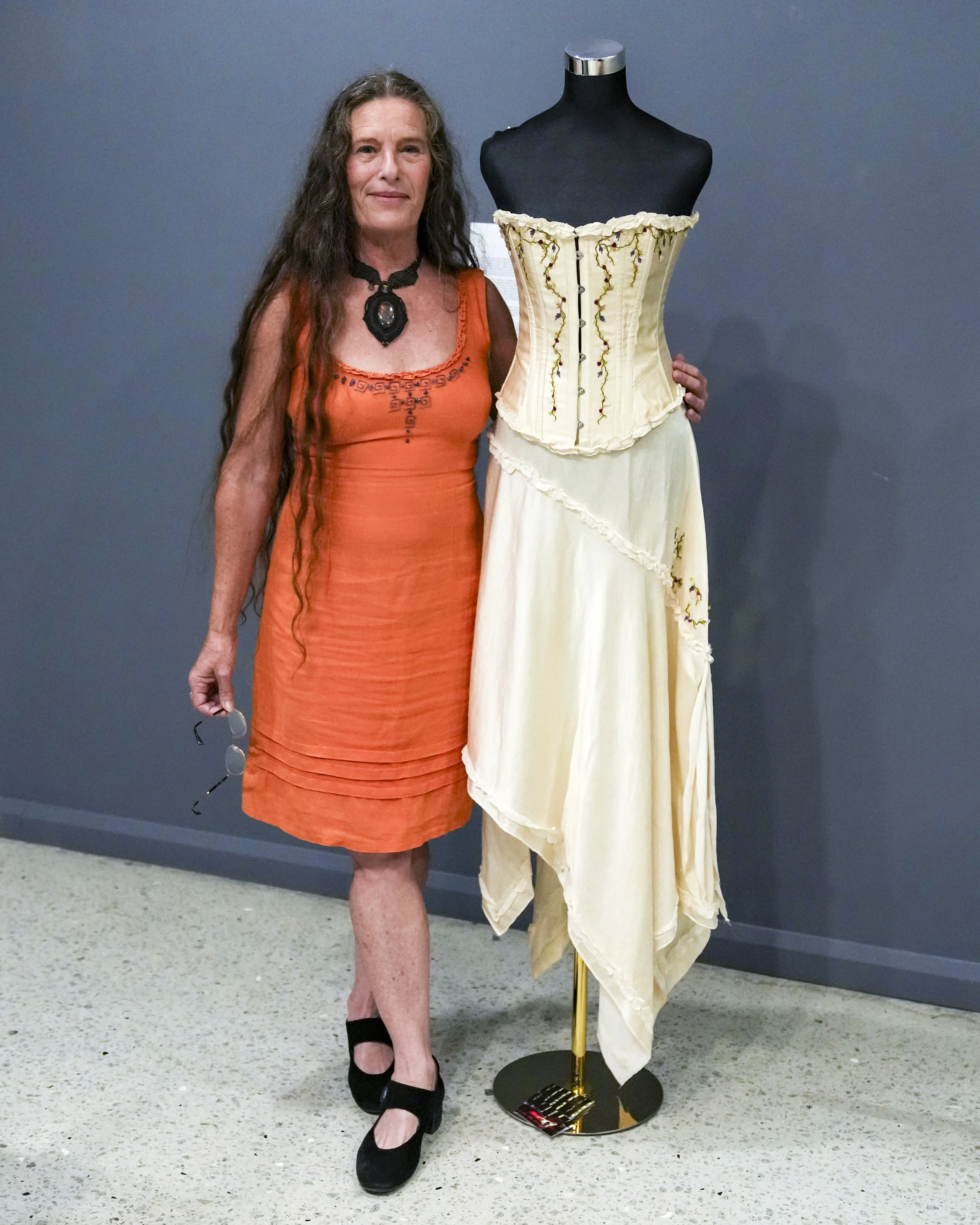
The theme for EFWA26 places a massive emphasis on slow, handcrafted production and environmental stewardship. How does your collection interpret "Handmade for the Earth" through your choice of techniques and materials?
I have been designing and creating for over 40 years now. I have ALWAYS had an emphasis on slow fashion, hand made. My entire collection through time has always represented "Handmade for the Earth". I have only ever used natural fibers and traditional fabrics in my couture pieces of art. Mostly Hemp, due to the high potential of durability.
Handcrafted garments carry a human element often lost in mass production. What specific artisanal process (e.g., natural dyeing, hand-spinning, zero-waste weaving, upcycling) defines this collection?
I live completely off grid in the middle of the Rainforest. I learnt to sew using both a crank and treadle sewing machine. My entire collection has been constructed by myself using either a 1902 treadle or 1936 crank singer sewing machine. Furthest manufacturing skills away from "mass" production one could possibly get. The embroidery and beading on each particular piece, I have done by hand.
EFWA26 bridges ancient textile traditions with modern design. How does your work incorporate or preserve cultural craftsmanship without losing a contemporary edge?
My designs are based on traditional craftsmanship incorporating the "Dapper" look of cultural time gone by along with the textiles I use, which, I believe, gives my work a "contemporary" edge.
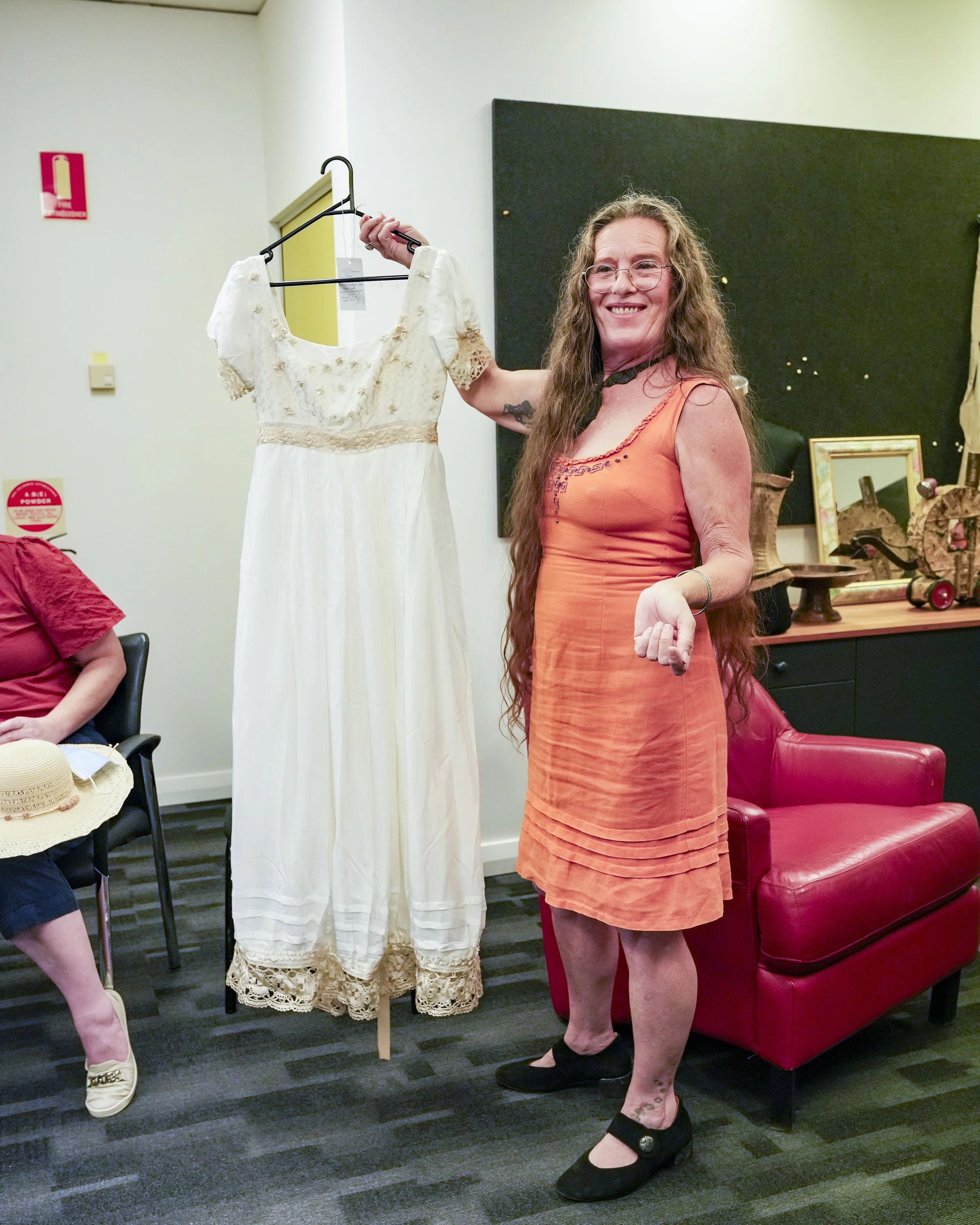
Photography: Simon Lau. Ellenbrook Art Gallery, 2024.
How do you ensure your garments remain truly low-impact across their entire life cycle, from source fiber to end-of-use?
The majority of my designs have always been incorporated using Hemp, due to the high level of embroidery my work usually entails, ensuring durability, withstanding the test of time.
Showing at the Midland Junction Arts Centre for the Perth segment of EFWA26 brings your work to a dedicated local and international community. What message or feeling do you hope the Western Australian audience takes away from viewing your pieces on the runway?
I hope that the Western Australian audience are re-educated in the consumerism process of not just the downfall "mass production" has on a global scale, but, what supporting "Handmade for the Earth" has on a community level. Not just for designers such as myself, but for all artisans who struggle daily trying to be noticed for our input on what this global issue has.
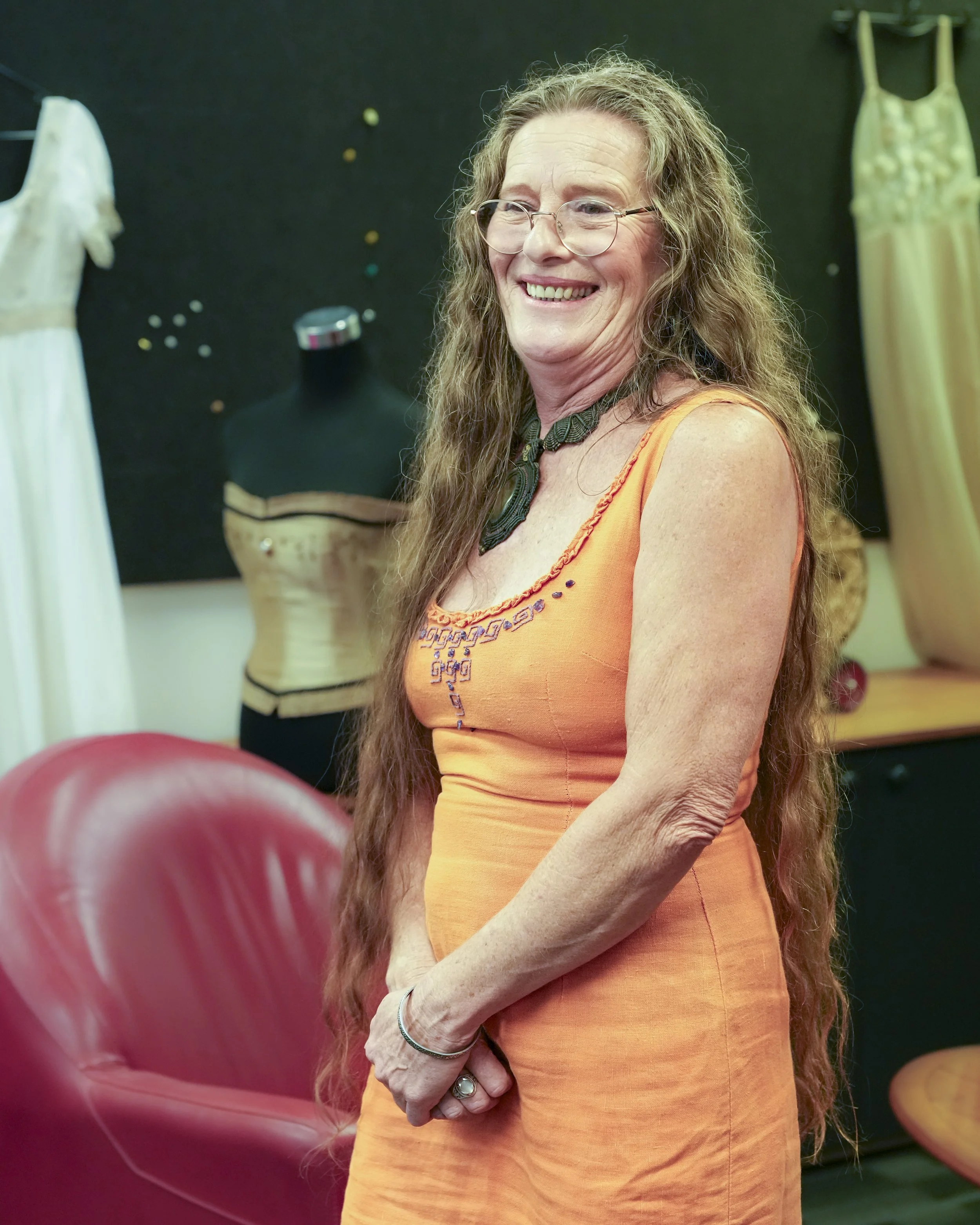
Photography: Simon Lau. Ellenbrook Art Gallery, 2024.
Fast fashion continues to dominate consumer markets. What do you believe events like EFWA can do to shift mindset toward valuing slow, handmade textiles?
Events like EFWA are our only solution really. Unfortunately, consumers are still clinging to the concept that a new dress is essential for every outing. That if it's cheap, it will work, bit like putting a bandaid over a wound that requires stitches, it doesn't work! Showcasing traditional textile techniques and designs, having the notion placed in front of consumers' faces is only the beginning. People need to want to adapt, and that is exactly where it becomes tricky, most people do not want to adapt, they still require bandaids. We need to continue placing value on slow handmade textiles with every event.