• Home
    • Our Story/Team
    • Interviews
    • About
    • Designers
    • Partners & Sponsors
    • Collection
    • About
    • Designers
    • Event Schedule
    • Seminar: Threads of Change
    • Ticket & Venue Information
    • RSVP (Invite Only)
    • Media Partners
    • In the News
    • Press Releases
    • Blog
  • Contact
Menu

Eco Fashion Week Australia

  • Home
  • About
    • Our Story/Team
    • Interviews
  • Buya Subi Project 2026
    • About
    • Designers
    • Partners & Sponsors
    • Collection
  • Handmade for the Earth 2026
    • About
    • Designers
    • Event Schedule
    • Seminar: Threads of Change
    • Ticket & Venue Information
    • RSVP (Invite Only)
  • Media
    • Media Partners
    • In the News
    • Press Releases
    • Blog
  • Contact

Similar Posts:

Blog Posts
  • July 2024 1
  • May 2024 1
  • April 2024 2
  • February 2024 1
  • January 2024 3
  • December 2023 1
  • November 2023 1
  • October 2023 2
  • September 2023 1
  • August 2023 1
  • June 2023 1
merrin 1.png

Behind The Scenes With Designer Merrin Glasgow of Classic Couture Vintage Bridal

June 28, 2018

by Marilyn R. Wilson

What drew you to become a fashion designer?

A passion for fabric, its abilities, qualities, influence and power. An early introduction to amateur and semi-professional theatre and costume. A background in Visual Art. Observation and learning from women in my family who employed/employ principles of couture. Introduction to pattern-making in my schooling.

Why was it important to you to offer a sustainable, responsible, Eco fashion line and how do you incorporate ideals such a Zero Waste into your work?

My early education and tight budgets determined a thrift and economic approach to cutting and production of garments. A “waste not want not” mantra was a fundamental part of my background. I incorporate remnants / off-cuts where feasible, be it in additional garments, or embellishments. I work with predominantly natural fabrics. I also re-purpose existing garments to continue the life of the fabric and also enjoy the challenge of re contextualizing

Merrin A.png

Where do you find inspiration for new work?

Historical dress, certain periods in particular. Notable artisans of haute couture. Artworks and artists. Flora and its evolution.

What materials do you work with – organic, reclaimed, etc.?

I work with predominantly silks, linen, cotton and wool. I utilize reclaimed and gifted fabrics, trims and notions.

What are the biggest challenges you face as a sustainable designer? 

Educating the audience and or consumer of the significance, quality, value and practice of slow fashion. Sourcing reputable suppliers of ethically produced fabrics and associated resources.

How do you help customers understand the higher cost of sustainable garments when they are so inundated with sweat shop-produced cheap merchandise?

Conversation with clients and audience. Education through regular and persistent exposure of my practices and garments, utilizing social media as a platform. Collaborations with like-minded artisans.

merrin b.png

What can we look forward to seeing on the runway at Eco Fashion Week Australia 2018?

An eclectic mix of bridal gowns influenced by specific historical periods including Elizabethan, Renaissance, Pre-Raphaelite and Regency/Edwardian. Features particular to the historical dress and or structure will be evident in the cut, fall, drape, gather or pleat. Surface decoration in the form of embellishment such as embroidery, attachment of manipulated remnants, inclusion of gifted trims and hand painting. My garments are essentially bespoke, starting with measurements, pattern making, fitting of the Toile before cutting and fitting. My practice is not generic. Fashion is a form of theatre. Fashion speaks volumes.

How do you incorporate sustainable living in other areas of your life?

I am an avid gardener and plant both ornamental and productive seeds. All green waste is given to my poultry which in turn provides eggs, and fertilizes our soils. I pick fruits in season and preserve them. I barter preserves and or share produce with others. I frequent opportunity stores to add to my wardrobe and or purchase fabrics to make garments.

merrin d.png

Anything else you would like readers to know?

I reside in a small regional community in New South Wales, Australia. I am eager to collaborate with like-minded artisans and willing to learn from others knowledge and experience.

I believe I can contribute to educating aspiring designers and makers in a range of skills around couture, given my early exposure and substantial experience in drafting patterns, dressmaking, costuming, teaching of Visual Arts and Textiles Technology. I would love the opportunity to share my knowledge in a teaching and learning environment as a vehicle for developing awareness of the many and varied benefits of slow fashion.

I am passionate about design and construction and will relish any future opportunities that present.

merrin c.png

Links -

  • Website - www.classiccouture.com.au
  • Instagram - @classiccouturevintagebridal
  • Facebook - www.facebook.com/ClassicCoutureVintageBridal/
Tags: Merrin Glasgow, classic couture vintage bridal, eco bridal, Eco Fashion Week Australia 2018, EFWA, eco fashion, sustainable fashion, Australia, interview, designer interview
Workshop 4.jpg

Behind the Scenes Interview With Designer Rose Mercer of Livie Rose Designs

June 26, 2018

by Marilyn R. Wilson

What drew you to become a fashion designer?

I have always been a creative person, making my own accessories and clothing since I was young. Jewellery became my creative outlet as I really love the individual style you can create and how different and unique each design can be.

Being concerned about the environmental impact and production processes of commercial fashion and jewellery I wished to create a Eco-friendly alternative. 

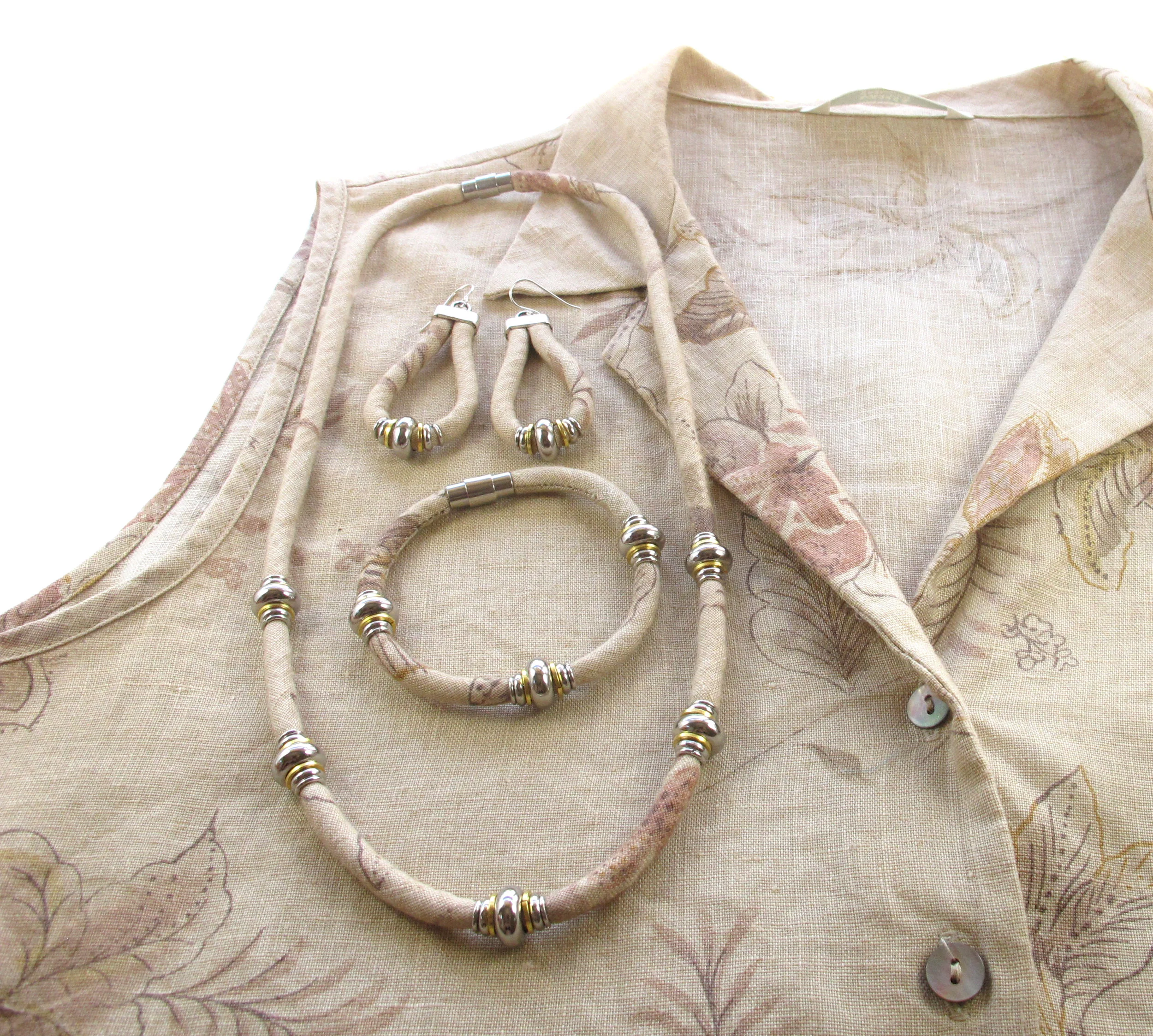
Having learnt my way around a sewing machine at a young age, I combined my sewing and jewellery skills to develop my latest range of recycled textile jewellery. 

reef knot.png

Why was it important to you to offer a sustainable, responsible, Eco fashion line and how do you incorporate ideals such a Zero Waste into your work? 

Approximately 500,000 tonnes of clothing goes into landfill every year in Australia. This is a fact that I just can not understand... How so much time and effort can go into creating a item of clothing to just be worn a handful of times then discarded.

By reusing unwanted garments I create beautiful, unique jewellery out of what would otherwise be waste. My process ensures I use as much of each item as possible so there is little waste. All buttons, zippers ect are saved for future use and any pieces of fabric not suitable for my jewellery I save for reusing as gift bags or packaging.

Where do your find inspiration for new work?

I am inspired by natural products and textures. In fact, it is often the fabric itself that inspires me. Because I am using recycled fabric, I can't just go and buy the fabric I need. So I get excited when I stumble across a unique, pre-loved garment and instantly know that it will be perfect for one of my designs.

Also the beautiful, vibrant colours of the tropical environment that surrounds me here in Port Douglas is a constant source of inspiration.

fabric bracelet.png

What materials do you work with – organic, reclaimed, etc.?

I work with recycled linen and silk. I purchase pre-loved clothing which I deconstruct then up-cycle in to my jewellery designs. 

What are the biggest challenges you face as an sustainable designer?

Sourcing sustainable materials has always been a challenge as a jewellery designer. This is what inspired me to start using recycled fabric as my medium, but I still need to purchase beads, clasps, etc.. Finding Eco-friendly, sustainable sources for these items is a constant challenge, As the fashion industry has become more sustainable, it is becoming easier to find reputable companies. 

Upcycled jewellery.jpg

How do you help customers understand the higher cost of sustainable garments when they are so inundated with sweat shop-produced cheap merchandise?

When talking to customers I explain my process and detail all the work that goes into each and every piece of jewellery. 

When confronted with the step by step process most customers realize the time and effort involved in producing a quality product and appreciate the work involved and therefore the higher cost, but not always. Hopefully events such as Eco Fashion Week will help educate people about the hidden costs of cheap, fast fashion.

earrings.png

What can we look forward to seeing on the runway at Eco Fashion Week Australia 2018?

I am designing a special collection exclusively for Eco Fashion Week this year. It is going to be bigger and bolder than any of my previous collections and is inspired by our beautiful tropical environment here in Far North Queensland.

How do you incorporate sustainable living in other areas of your life?

I try to be environmentally conscious in my lifestyle as much as possible. From having a garden and compost to sourcing the majority if my own and my family's clothing from op-shops. By saying No to single use plastic as much as possible and by educating my kids as to why this is necessary.

reef knot 3.png

Links

  • Website - www.livierosedesigns.com.au
  • Facebook - www.facebook.com/livierosedesigns
  • Instagram - www.instagram.com/livierosedesigns
  • Pinterest - www.pinterest.com.au/livierosedesign
    Tags: eco fashion, Eco Fashion Week Australia 2018, Eco Fashion Week Australia, EFWA, EFWA 2018, sustainable fashion, ethical fashion, jewellery, jewelry, eco jewellery
    Newer / Older
    Back to Top

    Follow us on Social Media

    © 2023 Eco Fashion Week Australia™️

    All Rights Reserved.

    EFWA BUSINESS AWARDS 24 (4).png
    EFWA CSR.png