• Home
    • Our Story/Team 2026
    • Interviews
    • Buya Subi Project | 2026-30
    • EFWA26 Project Designers
    • EFWA Buya Subi Project | Partners & Sponsors
  • EFWA26 Handmade for the Earth Shows | Exhibitions
    • Media Partners
    • In the News
    • Press Releases
    • Blog
  • Contact
Menu

Eco Fashion Week Australia

  • Home
  • About
    • Our Story/Team 2026
    • Interviews
  • EFWA Buya Subi Project
    • Buya Subi Project | 2026-30
    • EFWA26 Project Designers
    • EFWA Buya Subi Project | Partners & Sponsors
  • EFWA26 Handmade for the Earth Shows | Exhibitions
  • Media
    • Media Partners
    • In the News
    • Press Releases
    • Blog
  • Contact

Similar Posts:

Blog Posts
  • July 2024 1
  • May 2024 1
  • April 2024 2
  • February 2024 1
  • January 2024 3
  • December 2023 1
  • November 2023 1
  • October 2023 2
  • September 2023 1
  • August 2023 1
  • June 2023 1
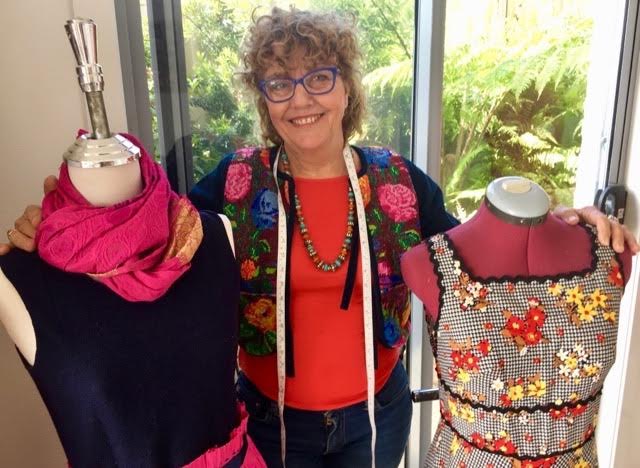
The Shire Seamstress.jpg

Behind The Scenes Interview With Satisha Young of The Shire Seamstress

August 27, 2018

by Marilyn R. Wilson

What drew you to become a fashion designer?

I was born into a family of Dressmakers and Milliners. It seemed completely natural to me that this would be my vocation in Life. My first job out of school was working as a Junior Finisher for a Bridal House, and this was the door that opened my eyes to the world of couture dressmaking. A few years later I went to study Fashion Design at an Art College which was another major influence in my life.

Why was it important to you to offer a sustainable, responsible, Eco fashion line and how do you incorporate ideals such a Zero Waste into your work?

The Rana Plaza disaster in 2013 was the catalyst that touched me profoundly on both a social & environmental level.

I am now an active ambassador for 'Fashion Revolution' in both my personal and business life.  As I was bought up with a "mend your clothes & make your own clothes" approach to life, I have always enjoyed the challenge of making the most with less! Whether it be refashioning an existing garment, mixing new & reused fabric together or reusing fabric scraps for other design projects.

4.png

Where do your find inspiration for new work?

#1 Nature...Colours, Patterns, Textures #2 Travel...ethnic costumes, cultural crafts and arts  #3  Museums/Art Galleries...historical costumes as well as all other art forms #4 Haute Couture both past & present #5 Environmental Artists

What materials do you work with – organic, reclaimed, etc.?

I use predominately reclaimed, repurposed natural fibres. I also use quite a lot of 'gifted' clothes and fabrics as well as drawing on my own stash collected over the past 40 years. If I do need to buy new fabrics it will always be a natural fibre & organic when available. Oh! I love to scour OP shops and garage sales for treasures as well.

What are the biggest challenges you face as an sustainable designer?

As a Bespoke Designer with strong ethics related to 'Fashion Revolution' my clients predominately are also moving in the direction of conscious consumerism in all areas of their lives. It's inspiring to see clients wanting to educate themselves & their families to live more ethically and care deeply about #whomademyclothes

2.png

How do you help customers understand the higher cost of sustainable garments when they are so inundated with sweat shop-produced cheap merchandise?

The majority of my clients are aware of my work through Social Media and collaborations I have had with other Eco Designers.

With my Bespoke services my clients appreciate that I am making a garment that is specifically tailored for them with attention to detail and the highest quality workmanship.

For the alterations/mending side of my business this is where clients get to learn firsthand the effects of fast fashion and this is usually when they will then start to look more closely at 'buy better, buy less' becoming a new part of how they consume.

What can we look forward to seeing on the runway at Eco Fashion Week Australia 2018?

A unique & eclectic collection of Bridal Gowns that will encompass both traditional & non-traditional Bridal Wear. I will use a variety of techniques and applications from Refashioning Vintage fabrics, Lace and trims, Eco-dyed fabrics and Millinery items.

As a 'Wedding Dress' is the one of the most memorable and treasured items a woman will ever own, it is my passion that this dress is a reflection of the 'heart and soul' of the woman wearing it and that she embodies this LOVE on her special day.

3.png

How do you incorporate sustainable living in other areas of your life?

KeepCups, Stainless Steel water bottles, bamboo cutlery for meals out, cloth serviettes, taking my own containers to the weekly farmers markets, cloth shopping bags & net veggie bags.

I am very conscious of energy consumption and am excited about installing solar panels in the near futrure. Hot water is switched to off-peak use. Sweeping over vacuuming. Cold water for clothes washing. Sunshine + Clothes Airer versus clothes dryer.

I have a Permaculture garden which is an ethical design tool in itself. It is a harmonious approach to gardening & creates sustainability

Anything else you would like readers to know?

I count my blessings each & everyday to live amongst an amazing and supportive community in a beautiful part of Northern New South Wales, cradled between mountain ranges and the ocean.
1.png

My passion is "Fashion Revolution" and one of my beliefs is that we all have something to share and that we can ALL make a difference in our own unique way. I am passionate about Slow Fashion, and teaching my skills onto younger generations. To lead by example 'saving the World one stitch at a time' is my business Mantra.

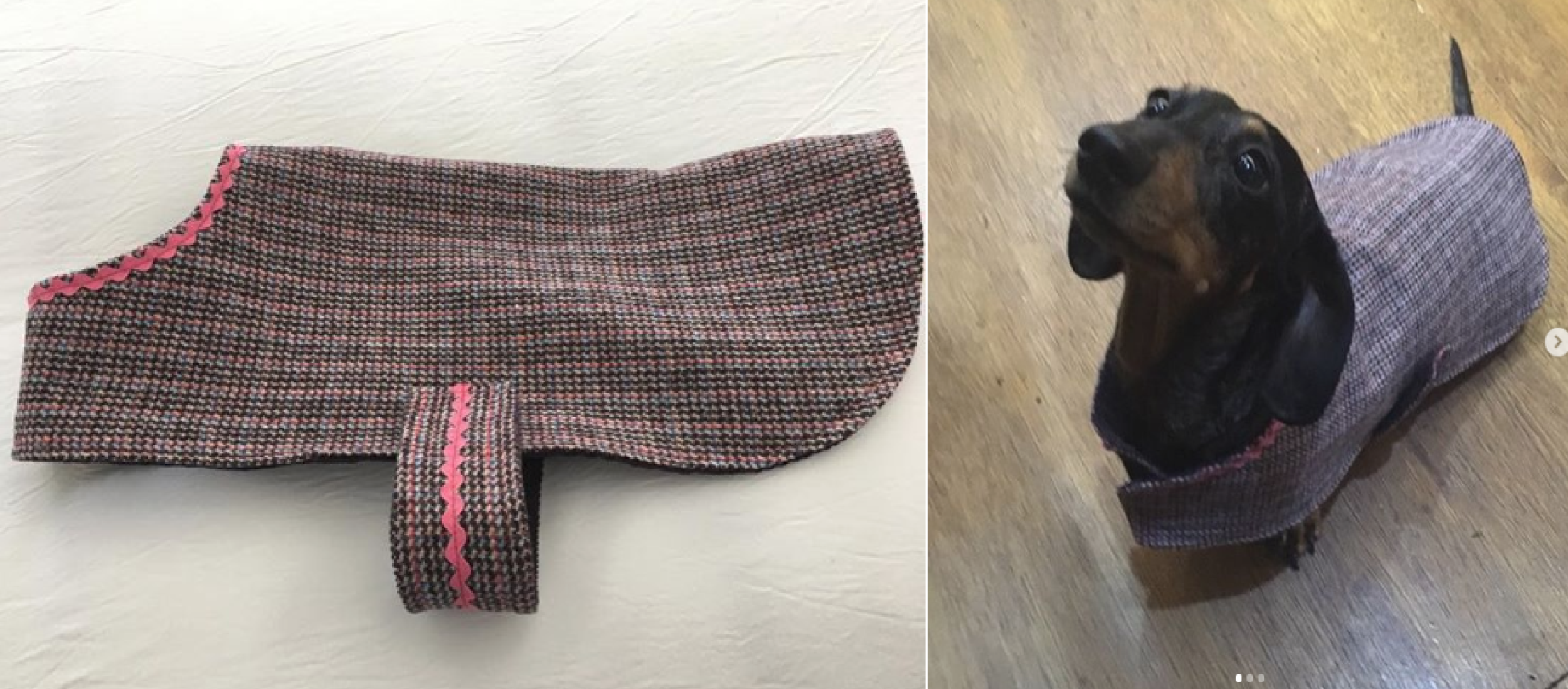
Oh! and for fun, I make Bespoke Dogs coats for my friends dogs from Vintage fabrics & Notions that reflect their unique character as well!

Links - 

  • Website - www.theshireseamstress.com
  • Instagram -  https://www.instagram.com/theshireseamstress/
  • Facebook - https://www.facebook.com/TheShireSeamstress/
  • Etsy - https://www.etsy.com/shop/theshireseamstress
Tags: efwa, efwa2018, eco fashion week australia, eco fashion week australia 2018, interview, designer interview, eco fashion, sustainable fashion, ethical fashion, fashion, runway, Satisha Donna Young, the shire seamstress, australia, perth
35416127_1297103483726576_119735502004813824_n.jpg

Behind the Scenes Interview With Designers Sanya Zunic and Snezana Swarbrick of NoRuYeLo

August 26, 2018

by Marilyn R. Wilson

What drew you to become a fashion designers?

Fashion design is a vehicle, albeit a fun vehicle, for us to deliver what we feel is much needed to counter the consumerism behavior at its peak. We want to be a part of a new philosophy of living sustainability, respecting one another and the Earth. Without a formal education in fashion design per se, we have combined our experiences of architect and community worker, photographer and international business developer, to create something new and fun in order to prove the concept that we are wasting too much and that most things which we are too quick to discard to landfill, still have lots of live in them.

We want our message to be a positive one, to reach the maximum number of people, and to accomplish what we believe we must do something - what we are passionate about - in order for our passion to inspire / infect others.

1.png

Why was it important to you to offer a sustainable, responsible, Eco fashion line and how do you incorporate ideals such a Zero Waste into your work?

Like we explained in the previous question, we started from the environment. Our concern for the environment was closely followed by our concern for people and the quality (or lack of it) of their work life and life in general. With this in mind, one of our first rules was: we will not waste ANYTHING. All the materials that donated to us (and in that way rescued from going to landfill) must be used.

We had to get very creative and think of all different designs and different products in order to follow through with this commitment. It is still a work in progress in the sense that we are collecting and keeping some types of materials that we will not use for clothing or anything that will be frequently washed due to the environmental hazards they present. However, we hope soon we will have some technological collaboration and we can then utilize them in such a way that circular design is teaching us.

2.jpeg

Further, in a practical sense: we collect all the scraps and off-cuts and reuse them in different products. We start our design by thinking how the least should be wasted in off-cuts. We also aim to design fully circular products where at the end of their life they will come back to us (or our collaborators) and be used in another new product.

Where do your find inspiration for new work?

NoRuYeLo’s melange design style is ever inspired by Earth and humanity and influenced by architects: a gentle, localist and humanist Alvar Aalto who was “concerned with people more than power, with pleasing more than impressing” and Dame Zaha Hadid with her curved lines architecture, often described as a “dynamic freeze frame action shots”. In his London speech Alto talks about “simple, good, undecorated things, things which are in harmony with the human beings”. Zaha Hadid claimed that architecture, "must contribute to society's progress and ultimately to our individual and collective well-being."

Although dramatically different, for both doyens of 20th/ 21st century architecture, humanism and humanity are the backbone of their design philosophies. NoRuYeLo’s design and philosophy also aims to be in harmony with humanity, to contribute to individuality and ultimately to our collective well-being. While down to earth and idealistic, at times, our designs have playful traces of Frank Ghery’s “funkiness”.

3.jpeg

What materials do you work with – organic, reclaimed, etc.?

Our materials are all reclaimed and vary between no longer wanted clothing and house wares to deadstock.

What are the biggest challenges you face as a sustainable designer?

Sustainable and ethical fashion is a new or unknown concept for most people. Therefore, first and possibly the hardest step is to explain / educate / inform people why is it an absolute necessity. To explain how damaging fast fashion is to the environment and humanity. This is why a lot of our promotional work is focused on not only our clothing, but promoting this concept as well.

How do you help customers understand the higher cost of sustainable garments when they are so inundated with sweat shop-produced cheap merchandise?

We do presentations where we invite the audience to join us with an open mind and we share what we have learned – all the horrible truths. At the same time we aim to inspire them to FALL IN LOVE with each and every item they buy and over the lifetime of that beloved item the cost will be insignificant. We invite them to have a personal style and not to follow trends. We invite them to think and feel for themselves.

At the end of the day, it is a hard process to achieve any radical change in a society, but we would rather do the hard thing than the wrong thing.

4.jpeg

At the end of the day, it is a hard process to achieve any radical change in a society, but we would rather do the hard thing than the wrong thing.

What can we look forward to seeing on the runway at Eco Fashion Week Australia 2018?

  • Versatility – in form, design and ways of wearing the same item.
  • Uniqueness – not two items are the same, much like people who will be wearing them and styling them to their own taste.
  • Humanity – fashion for all shapes and sizes.

How do you incorporate sustainable living in other areas of your life?

Hmmm… where do we start and how much room do you have for us to talk about this… hahaha.  It has been a long-term personal journey for both of us that lead sustainable living to be the inspiration for our fashion design.

Anything else you would like readers to know?

We invite all people interested in this kind of fashion and living to contact us if they wish to:

  • Volunteer – get experience and be part of by volunteering in all parts of the creative process, social media and marketing, fashion shoots and fashion shows etc.
  • Collaborate – we like to connect with our tribe
  • Purchase – for any sales inquiries or bespoke pieces, talk to us
  • Or Donate – if you don’t have the time, but you would still like to contribute in a way of monetary, fabric or equipment donations, please know that we are a registered not-for-profit charity.
5.jpeg

Links -

  • Website - www.noruyelo.org.au
  • Instagram - @noruyelo
  • Facebook - www.facebook.com/noruyelo/
Tags: efwa, efwa 2018, eco fashion week australia, eco fashion week australia 2018, eco fashion, sustainable fashion, ethical fashion, designer interview, interview, NoRuYeLo, Perth, Australia
Newer / Older
Back to Top
 

Follow us on Social Media

© 2023 Eco Fashion Week Australia™️, All Rights Reserved.